Missing & Exploitation
HOW MISSING-PERSON CASES CAN INTERSECT WITH HUMAN TRAFFICKING, SEXUAL EXPLOITATION, LABOR EXPLOITATION AND OTHER VICTIMIZATION
A missing-person report does not automatically mean trafficking or exploitation. But when a person disappears, circumstances may exist that increase vulnerability to exploitation or indicate that exploitation may already be occurring.

A missing person may be vulnerable before, during or after a disappearance. Traffickers and other offenders can take advantage of isolation, instability, financial hardship, unmet needs, abuse, homelessness, online relationships and other circumstances. A person who is already being exploited may also disappear from the places where family, caregivers or authorities expect to find them.
WHAT IS HUMAN TRAFFICKING?
Sex Trafficking
Federal law defines sex trafficking as recruiting, harboring, transporting, providing, obtaining, patronizing or soliciting a person for a commercial sex act when the act is induced by force, fraud or coercion, or when the person induced to perform the act is under 18.
Labor Trafficking
Labor trafficking involves compelling or coercing a person to provide labor or services. Coercion can be physical, psychological, financial or otherwise controlling and does not always look like physical restraint.
WHERE THE CASES CAN INTERSECT
A MISSING-PERSON CASE AND AN EXPLOITATION CASE MAY BE CONNECTED
In some situations, the disappearance itself may be related to exploitation. In others, exploitation may occur after someone has gone missing. The connection may not become apparent until investigators, family members, service providers or other agencies compare information.
Person Goes Missing
Family, caregivers or authorities lose contact with the person.
Vulnerability Exists
Isolation, homelessness, abuse, instability or other factors may increase risk.
Exploitation May Occur
A person may be recruited, coerced, manipulated or exploited.
Cases Connect
New information may help investigators identify the person's location, circumstances or victimization.
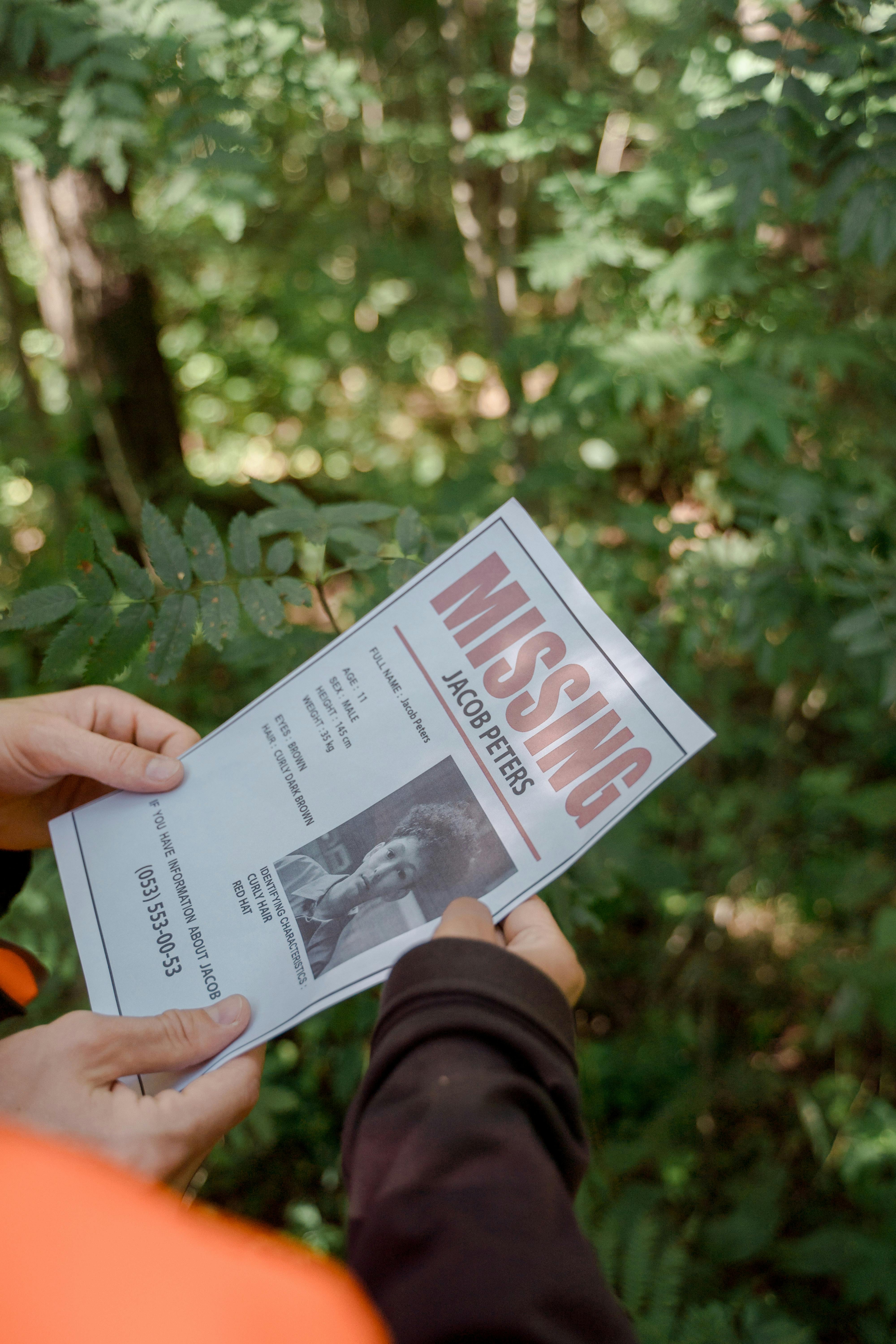
WHEN A CHILD RUNS AWAY
A child who runs away should not automatically be assumed to be safe simply because the child left voluntarily.
The National Center for Missing & Exploited Children reports that children who run away face disproportionate risks of exploitation, trafficking, substance exposure and violence.
NCMEC reported that in 2025, runaway cases accounted for 92% of missing-child cases reported to the organization. Among children missing from foster care who were reported to NCMEC in 2025, 17% were identified as likely victims of child sex trafficking.
FORMS OF EXPLOITATION & VICTIMIZATION
Commercial Sexual Exploitation
A missing person may be sexually exploited through trafficking, coercive relationships or other forms of commercial sexual exploitation. Children involved in commercial sex are considered trafficking victims under federal law.
Labor Exploitation
Exploitation can involve forced labor, withheld wages, debt manipulation, threats, coercion, restricted movement or other forms of control over a person's labor or services.
Domestic Servitude
Some victims may be controlled through domestic work and may have limited freedom, financial independence or access to people outside the household.
Online Exploitation
Online contact can be used to groom, manipulate, recruit or exploit vulnerable people. Technology can also complicate a missing-person investigation by creating digital connections across jurisdictions.
Criminal Exploitation
People experiencing exploitation may be forced or coerced into criminal activity. Their disappearance or behavior may initially be misunderstood without recognizing the underlying victimization.
Physical & Psychological Abuse
Exploitation may occur alongside threats, intimidation, violence, sexual abuse, financial control, isolation or psychological manipulation.
LABOR EXPLOITATION DOES NOT ALWAYS LOOK LIKE CAPTIVITY
Labor trafficking can occur in ordinary-looking workplaces and industries. The defining issue is not simply difficult or unfair working conditions; federal law focuses on compelled labor or services through force, fraud or coercion.

VULNERABILITY CAN INCREASE AFTER A PERSON GOES MISSING
A person who is away from familiar surroundings may have fewer resources, less access to trusted adults or family members, and greater dependence on strangers or newly formed relationships. Those circumstances can create opportunities for exploitation.
Homelessness
Lack of safe housing can make a person dependent on others for food, transportation or shelter.
Isolation
Separation from family, caregivers and trusted adults can make exploitation harder to detect.
Financial Need
Immediate financial pressures can be manipulated by people offering money, housing, employment or transportation.
Prior Victimization
Previous abuse or exploitation can create additional vulnerabilities that offenders may attempt to exploit.
Online Relationships
Online contacts can become important sources of influence, recruitment or manipulation.
Unstable Circumstances
Housing instability, family conflict and other disruptions can increase a person's exposure to unsafe situations.
NOT EVERY MISSING PERSON IS A TRAFFICKING VICTIM
This distinction matters. A missing-person case should not automatically be labeled trafficking simply because exploitation is possible. People go missing for many different reasons, including family conflict, mental health-related circumstances, accidents, abductions, voluntary absence, disorientation and unknown circumstances. Trafficking is one possible circumstance that investigators may need to consider based on the facts of an individual case.
WHAT INVESTIGATORS MAY LOOK FOR
Changes in Contact
Sudden changes in phone numbers, social media accounts, locations, communication patterns or relationships may become relevant when examined alongside other evidence.
Financial Activity
Unusual financial transactions, unexplained employment or changes in access to money may provide investigative leads when appropriate legal processes are followed.
Transportation & Locations
Travel records, known locations, transportation patterns and geographic connections may help investigators reconstruct a person's movements.
Relationships
New acquaintances, romantic relationships, employers, online contacts or other individuals may become relevant depending on the circumstances of the disappearance.
SOURCES & DATA REFERENCES
DOJ explains the federal definitions of sex trafficking and labor trafficking and discusses the use of force, fraud and coercion.
View DOJ Human Trafficking Information →NCMEC provides information on missing children, child sex trafficking, runaway children and the risks of exploitation associated with children who go missing.
View NCMEC Child Sex Trafficking Resources →NCMEC identifies running away as a significant vulnerability factor for child sex trafficking and explains why runaway cases should not automatically be considered low-risk.
Read NCMEC's Runaway & Trafficking Information →OJJDP supports programs addressing missing and exploited children and recognizes the connection between missing children and exploitation investigations.
View OJJDP Missing & Exploited Children Resources →